
Introduction
The healthcare sector has witnessed rapid technological advancements in recent years, especially in surgical infrastructure and critical care environments. Cardiac surgeries are among the most sensitive and complex medical procedures, requiring highly sterile environments, advanced medical equipment, and seamless operational coordination. To meet these demands, hospitals are increasingly adopting the Modular Cardiac Operation Theatre concept to improve patient safety, infection control, and surgical efficiency. These technologically advanced operation theatres combine modular engineering, advanced airflow systems, integrated utilities, and contamination-control technologies to create highly controlled surgical environments. Companies like Altus Airflow help healthcare facilities establish modern cardiac operation theatres designed to support precision, sterility, and long-term operational performance.
Understanding a Modular Cardiac Operation Theatre
A Modular Cardiac Operation Theatre is a specially designed operation theatre built using prefabricated modular systems and advanced engineering technologies.
It generally includes:
Modular wall and ceiling systems
Laminar airflow systems
HEPA filtration
Positive pressure systems
Medical gas pipelines
Advanced surgical lighting
Smart OT automation
Integrated electrical systems
These integrated components help create a sterile, efficient, and technologically advanced environment for cardiac surgeries.
Superior Infection Control
One of the most important benefits of modular cardiac OTs is enhanced infection prevention.
Cardiac surgeries are highly sensitive procedures where even minor contamination can create serious complications.
Modern modular OTs include:
HEPA filtration systems
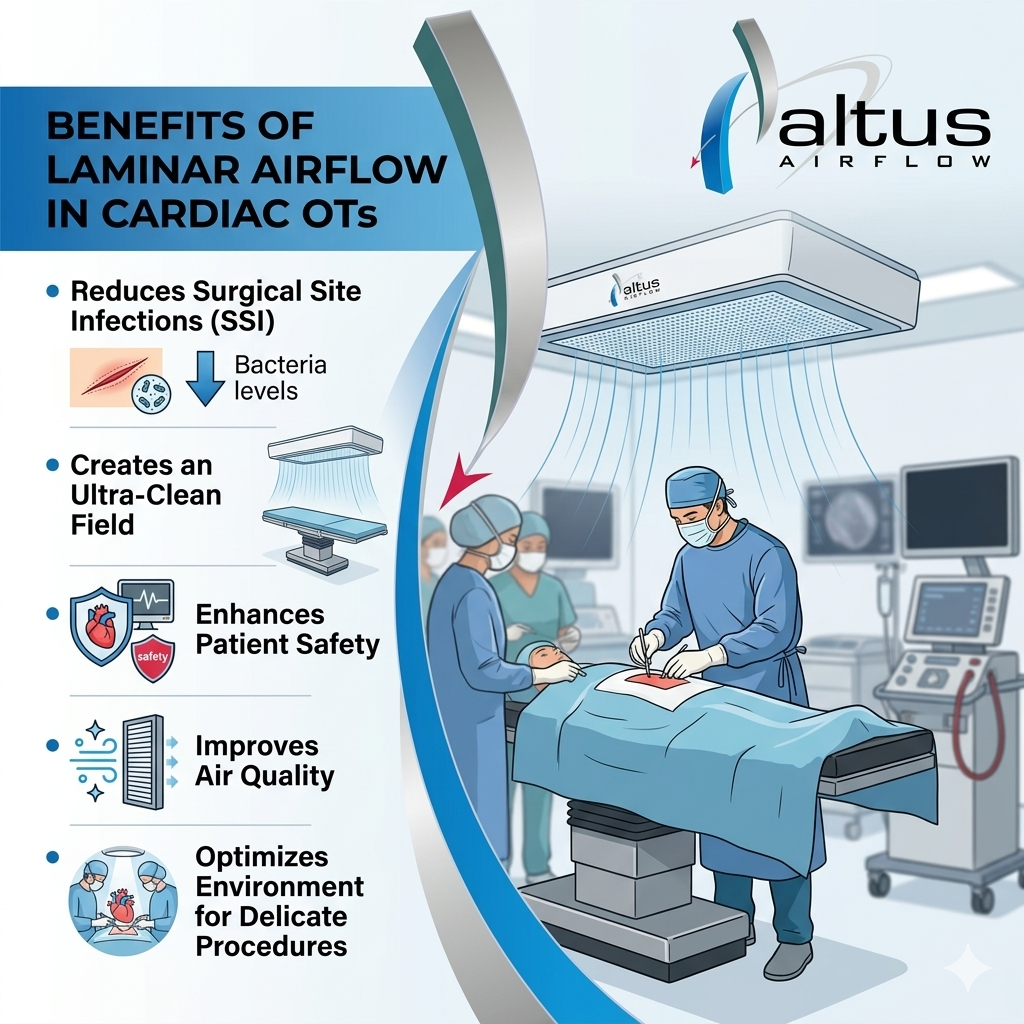
Laminar airflow
Positive pressure environments
Antibacterial wall panels
Seamless surfaces
These systems significantly reduce airborne contamination and surgical site infections.
Advanced Airflow Management
Air quality management is critical in cardiac surgeries.
A professional Modular Cardiac Operation Theatre uses advanced HVAC systems that maintain:
Clean filtered airflow
Stable temperature
Controlled humidity
Positive air pressure
Laminar airflow systems continuously circulate filtered air over the surgical area, helping maintain sterile conditions throughout the procedure.
Better Patient Safety
Patient safety is one of the primary goals of modular OT engineering.
Modern cardiac OTs improve patient safety through:
Sterile environments
Stable environmental control
Advanced equipment integration
Reliable utility systems
Controlled operation theatre conditions reduce complications and improve surgical outcomes.
Improved Surgical Efficiency
Cardiac surgeries involve multiple specialists and sophisticated equipment.
Modular OT layouts optimize:
Equipment accessibility
Surgeon movement
Staff coordination
Workflow management
Efficient workflow reduces surgical delays and improves operational productivity.
Faster Construction and Installation
One of the major advantages of modular technology is faster installation.
Modular operation theatres are prefabricated and assembled quickly, reducing:
Construction time
Installation delays
Operational disruptions
Hospitals can begin using the OT sooner compared to traditional construction methods.
Customized Design Solutions
Every healthcare facility has different operational requirements.
A Modular Cardiac Operation Theatre can be customized according to:
Available space
Surgical workload
Patient volume
Workflow needs
Future expansion plans
Customized layouts improve efficiency and long-term flexibility.
Better Air Sterility
Air sterility is extremely important during cardiac surgeries.
Modular cardiac OTs use advanced technologies such as:
Laminar airflow
HEPA filters
Positive pressure systems
These systems reduce airborne particles and maintain ultra-clean surgical environments.
Advanced HEPA Filtration
HEPA filters are among the most critical components of modular cardiac OTs.
These filters remove:
Dust particles
Airborne bacteria
Pathogens
Microscopic contaminants
HEPA filtration improves infection control and surgical safety.
Positive Pressure Environment
Positive pressure systems prevent contaminated external air from entering the operation theatre.
These systems ensure:
Outward airflow movement
Stable sterile conditions
Reduced contamination risk
Positive pressure environments are essential for cardiac surgery safety.
Seamless Modular Infrastructure
Modular construction uses specially designed seamless wall and ceiling systems.
Benefits include:
Easy cleaning
Better hygiene
Reduced microbial growth
Improved durability
Seamless infrastructure improves long-term contamination control and maintenance efficiency.
Reliable Medical Gas Pipeline Systems
Cardiac surgeries require uninterrupted access to medical gases.
A Modular Cardiac Operation Theatre includes integrated systems for:
Oxygen supply
Vacuum systems
Compressed air
Nitrous oxide
Professionally installed medical gas systems improve surgical efficiency and patient safety.
Advanced Electrical Infrastructure
Cardiac operation theatres contain highly sensitive medical equipment that depends on reliable electrical systems.
Modular cardiac OTs include:
UPS backup systems
Isolated power systems
Generator support
Circuit protection systems
Reliable power infrastructure minimizes risks associated with electrical failures.
Smart OT Automation
Modern cardiac OTs increasingly use smart automation technologies.
Automation systems control:
Temperature
Humidity
Air pressure
Lighting
Communication systems
A professionally engineered Modular Cardiac Operation Theatre with automation improves operational precision and reduces manual intervention.
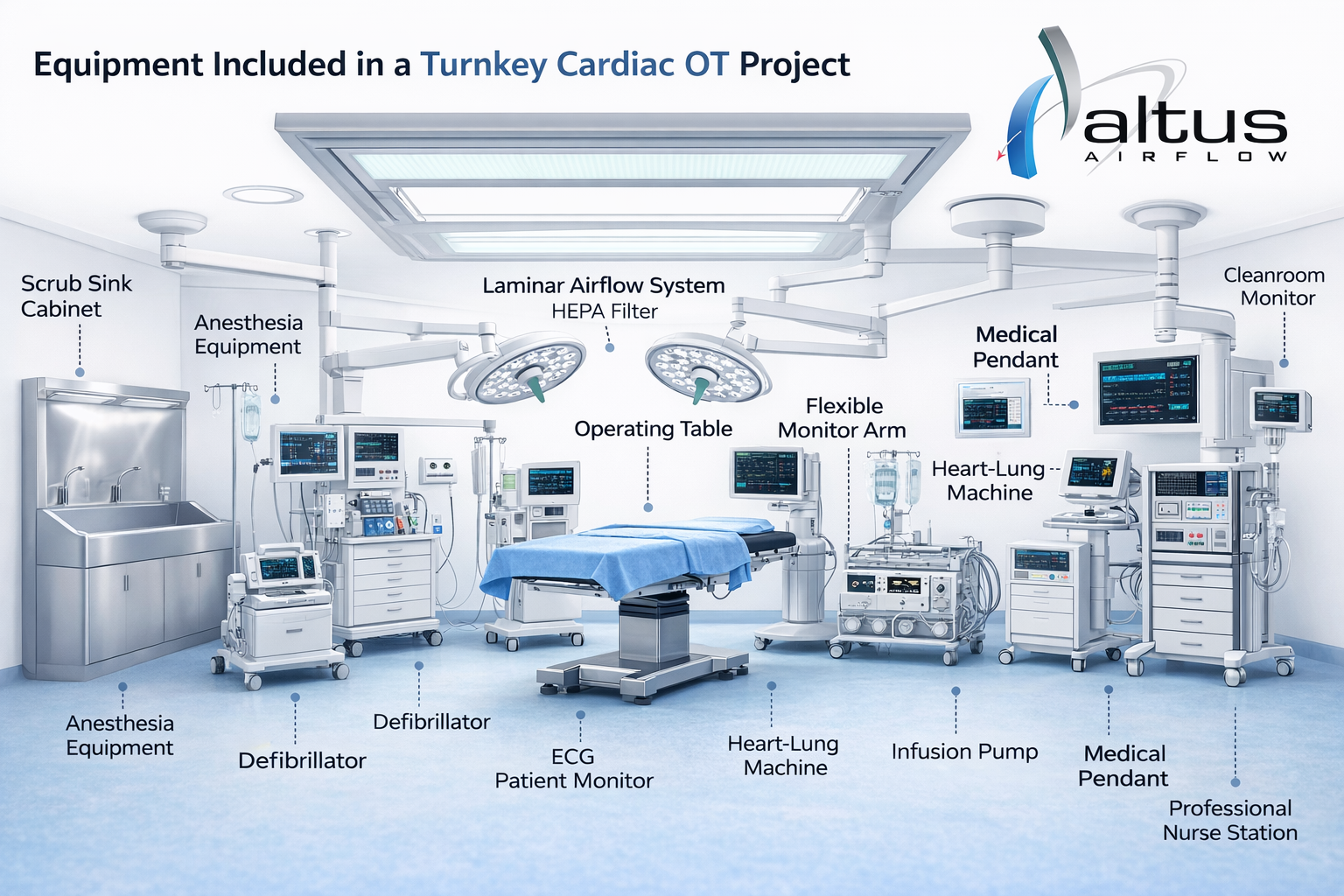
Better Equipment Integration
Cardiac OTs require advanced medical technologies such as:
Heart-lung machines
Surgical pendants
Anesthesia workstations
Patient monitoring systems
Imaging systems
Integrated equipment placement improves accessibility and workflow efficiency.
Easier Maintenance
Modular infrastructure is easier to maintain compared to conventional OT structures.
Maintenance benefits include:
Replaceable wall panels
Accessible utility systems
Simplified cleaning
Faster repairs
This reduces operational downtime and maintenance costs.
Long-Term Durability
Modular cardiac OTs use durable construction materials designed for healthcare environments.
These materials are:
Scratch-resistant
Chemical-resistant
Corrosion-resistant
Easy to sanitize
Durable systems improve long-term operational reliability.
Better Environmental Stability
Cardiac surgeries require stable environmental conditions throughout the procedure.
Modular OTs maintain:
Controlled humidity
Stable temperature
Sterile airflow
Positive pressure balance
Environmental stability improves surgical performance and patient safety.
Energy Efficiency
Modern modular cardiac OTs use energy-efficient technologies such as:
Smart HVAC systems
LED lighting
Automated controls
Energy-efficient infrastructure reduces electricity consumption and operating costs.
Compliance With Healthcare Standards
Modular cardiac OTs are designed according to healthcare and infection control regulations.
Compliance includes:
Air quality standards
Electrical safety norms
Medical gas regulations
Fire safety guidelines
Regulatory compliance improves hospital accreditation and credibility.
Reduced Operational Downtime
Integrated OT systems reduce technical failures and operational interruptions.
Benefits include:
Better equipment coordination
Faster troubleshooting
Preventive maintenance support
Reduced downtime improves hospital productivity.
Enhanced Fire Safety
Modern modular OTs include advanced fire safety systems such as:
Smoke detectors
Fire alarms
Fire-resistant materials
Emergency response systems
Fire safety improves operational security.
Better Space Utilization
Efficient use of space is extremely important in operation theatres.
A Modular Cardiac Operation Theatre optimizes:
Equipment arrangement
Utility access
Staff movement
Storage organization
Optimized layouts improve workflow and productivity.
Improved Hospital Reputation
Advanced cardiac OTs help hospitals improve:
Surgical capabilities
Patient confidence
Healthcare credibility
Accreditation readiness
Modern infrastructure strengthens institutional reputation.
Scalability and Future Expansion
Healthcare technology continues evolving rapidly.
Modular OTs support:
Future upgrades
Equipment expansion
Smart technology integration
Additional OT development
Scalable infrastructure protects long-term investments.
Professional Testing and Validation
Before operation, modular cardiac OTs undergo extensive testing procedures.
These include:
Airflow validation
HEPA filter testing
Pressure testing
Electrical inspections
Equipment calibration
Testing ensures safe and reliable OT performance.
Future Trends in Modular Cardiac OTs
Future cardiac OTs may include:
AI-based environmental monitoring
Robotic-assisted surgery integration
Smart airflow optimization
Digital OT management systems
Hospitals continue investing in advanced OT technologies to support modern healthcare requirements.
Conclusion
Modular cardiac operation theatres provide numerous advantages for hospitals seeking advanced surgical infrastructure capable of supporting highly sensitive cardiac procedures. From superior infection control and advanced airflow systems to smart automation, modular construction, equipment integration, and environmental stability, these operation theatres improve patient safety, workflow efficiency, and long-term operational reliability. Their ability to support future healthcare technologies and scalable infrastructure makes them an ideal solution for modern healthcare institutions.
FAQs
1. What is a Modular Cardiac Operation Theatre?
A Modular Cardiac Operation Theatre is a technologically advanced surgical environment designed using modular construction, HVAC systems, laminar airflow, HEPA filtration, medical gas pipelines, and integrated medical technologies for cardiac surgeries.
2. Why are modular cardiac OTs important?
They improve infection control, airflow management, workflow efficiency, and patient safety during cardiac procedures.
3. What is the role of laminar airflow in cardiac OTs?
Laminar airflow maintains continuous filtered airflow to reduce airborne contamination and maintain sterile conditions.
4. Why are HEPA filters used in modular cardiac OTs?
HEPA filters remove airborne particles, bacteria, and contaminants from OT air circulation systems.
5. Are modular cardiac OTs customizable?
Yes, they can be customized according to hospital infrastructure, workflow needs, and future expansion plans.
Read Our Previous Blog --------------->What are the benefits of andrology room setup services?

Write a comment ...