
Introduction
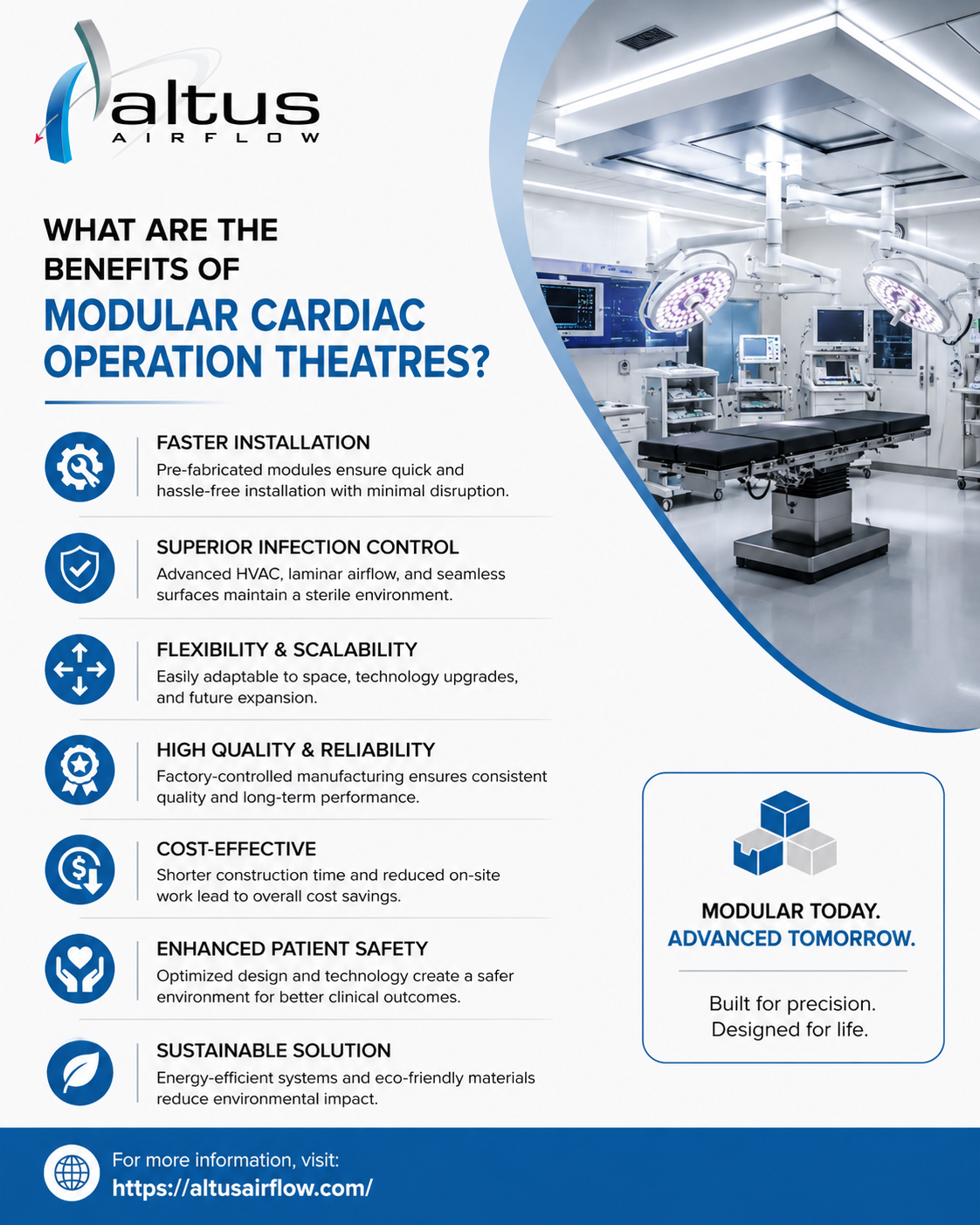
Cardiac surgeries are among the most complex and high-risk medical procedures, where maintaining a sterile and controlled environment is critical for success. Even the smallest airborne contaminant can lead to severe complications, including infections and prolonged recovery times. This is why modern hospitals are increasingly adopting a Cardiac Modular OT With Laminar Airflow to ensure the highest standards of safety and precision.
At Altus Airflow, we specialize in designing advanced operating theatre environments that integrate cutting-edge airflow systems. Laminar airflow plays a crucial role in maintaining ultra-clean air conditions, protecting the surgical site, and improving patient outcomes. In this blog, we will explore the key benefits of laminar airflow in cardiac OTs and why it is essential for modern healthcare infrastructure.
Understanding Laminar Airflow
Laminar airflow is a ventilation system that provides a continuous flow of filtered air in a uniform direction. Unlike turbulent airflow, which allows air to mix and spread contaminants, laminar airflow ensures a smooth, unidirectional flow that minimizes particle movement.
In cardiac OTs, laminar airflow systems:
Use HEPA filters to remove airborne particles
Maintain a steady and controlled air pattern
Continuously replace contaminated air with clean air
This creates a sterile environment around the surgical area.
Key Benefits of Laminar Airflow in Cardiac OTs
1. Significant Reduction in Surgical Site Infections (SSIs)
One of the most important benefits of laminar airflow is its ability to reduce surgical site infections. Cardiac procedures involve exposure of internal organs, making patients highly vulnerable to infections.
Laminar airflow helps by:
Delivering clean air directly over the surgical site
Removing bacteria and airborne contaminants
Preventing cross-contamination
This leads to safer surgeries and better patient outcomes.
2. Creation of a Sterile Surgical Environment
Maintaining sterility is essential in any operating theatre, especially in cardiac OTs.
Laminar airflow:
Creates a protective barrier around the operating table
Prevents contamination from staff movement
Keeps surgical instruments free from particles
This ensures a consistently sterile environment throughout the procedure.
3. Improved Patient Safety
Patient safety is the primary concern in any surgical setting. Laminar airflow contributes significantly to reducing risks during and after surgery.
Benefits include:
Lower chances of infection
Reduced complications
Enhanced recovery rates
This makes it a vital component of modern cardiac OTs.
4. Enhanced Surgical Precision
Cardiac surgeries require extreme precision and focus. Any environmental disturbance can affect the performance of the surgical team.
Laminar airflow:
Maintains stable air conditions
Prevents disruptions caused by airborne particles
Supports a controlled working environment
This allows surgeons to perform complex procedures with greater accuracy.
5. Faster Recovery and Reduced Hospital Stay
Patients who undergo surgery in a clean and controlled environment are less likely to develop infections.
This results in:
Faster healing
Shorter hospital stays
Lower medical costs
Laminar airflow directly contributes to improved patient recovery.
6. Compliance with Healthcare Standards
Modern healthcare facilities must adhere to strict regulatory standards. Laminar airflow systems help hospitals meet these requirements.
They ensure:
Compliance with air quality standards
Proper environmental control
Audit-ready infrastructure
This is essential for maintaining accreditation and trust.
7. Integration with Modular OT Design
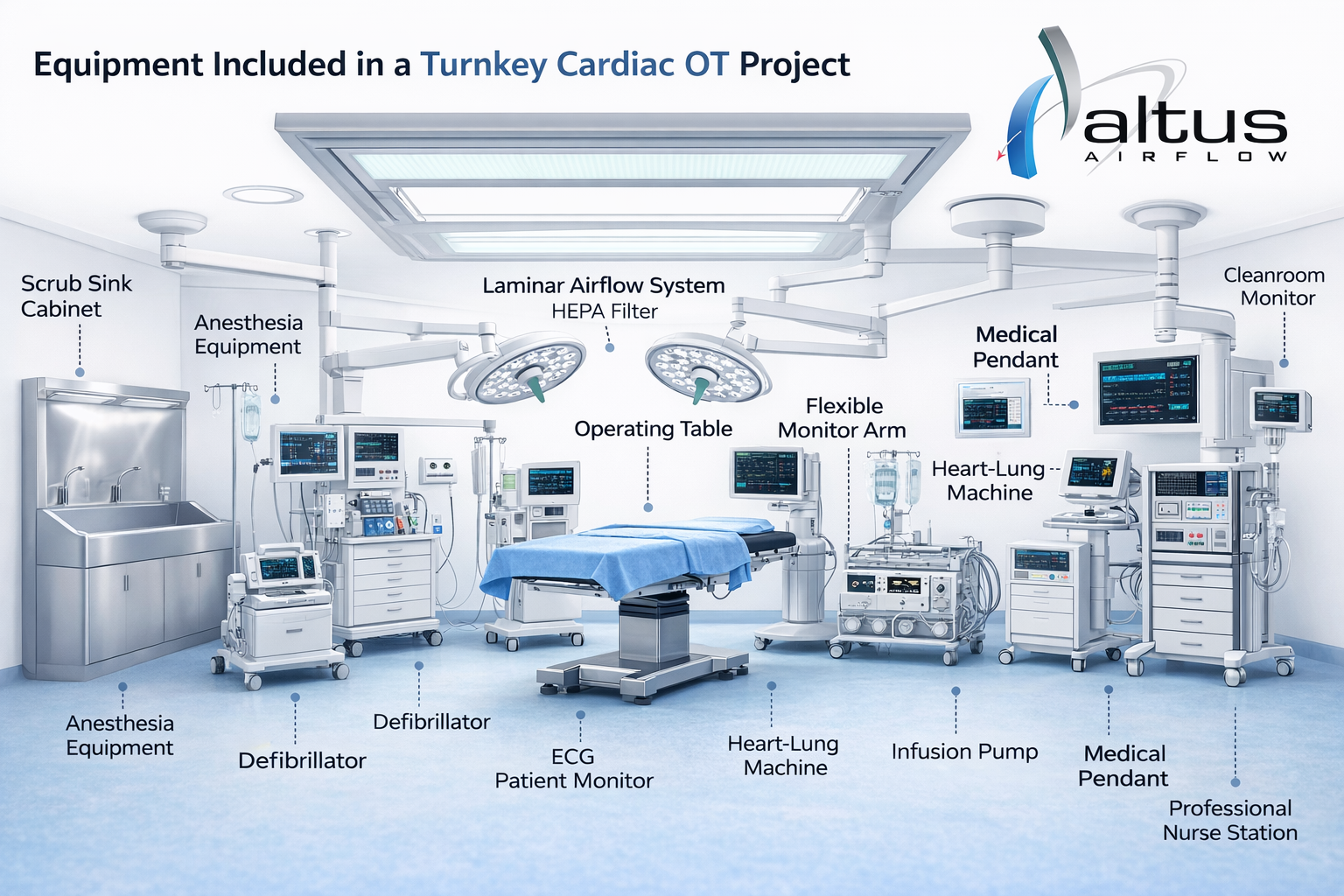
A Cardiac Modular OT With Laminar Airflow is designed to integrate advanced systems seamlessly.
Advantages include:
Efficient use of space
Optimized airflow distribution
Compatibility with advanced equipment
This enhances the overall functionality of the operating theatre.
8. Continuous Air Purification
Laminar airflow systems continuously filter and replace air, ensuring that the environment remains clean at all times.
Key features:
High air change rates
Consistent air quality
Removal of contaminants
This ensures uninterrupted sterility during long procedures.
9. Protection of Surgical Instruments
Contaminated instruments can lead to serious complications. Laminar airflow prevents particles from settling on surgical tools.
This helps:
Maintain instrument sterility
Reduce infection risks
Ensure smooth surgical operations
10. Long-Term Cost Efficiency
Although installing laminar airflow systems requires an initial investment, it offers long-term financial benefits.
These include:
Reduced infection-related costs
Lower maintenance expenses
Improved operational efficiency
Hospitals can achieve better outcomes while optimizing costs.
How Laminar Airflow Works
Laminar airflow systems are designed to deliver clean air in a controlled manner.
Key Components
1. HEPA Filters
Remove up to 99.97% of airborne particles, including bacteria and viruses.
2. Air Handling Units (AHUs)
Regulate airflow, temperature, and humidity.
3. Laminar Flow Diffusers
Distribute air evenly across the surgical area.
4. Return Air Grilles
Remove contaminated air and maintain circulation.
Working Process
Air is filtered through HEPA filters
Clean air flows in a unidirectional pattern
Contaminated air is pushed away from the surgical zone
Continuous air replacement maintains cleanliness
Types of Laminar Airflow Systems
1. Vertical Laminar Airflow
Air flows downward from the ceiling, directly covering the operating table.
2. Horizontal Laminar Airflow
Air flows horizontally across the room.
Vertical systems are more commonly used in cardiac OTs due to their effectiveness.
Role of Altus Airflow
Altus Airflow is a leader in providing advanced airflow solutions for healthcare facilities. Our expertise ensures that every cardiac OT is designed to deliver maximum efficiency and safety.
Our services include:
Customized airflow system design
Installation and integration
Testing and validation
Maintenance and support
We focus on creating environments that support successful surgeries and patient care.
Challenges Without Laminar Airflow
Operating theatres without proper airflow systems face several risks:
Higher infection rates
Poor air quality
Contamination of surgical instruments
Non-compliance with standards
Increased healthcare costs
These challenges highlight the importance of laminar airflow systems.
Future Trends in Cardiac OT Airflow
The future of cardiac OTs is driven by innovation and technology.
Emerging trends include:
Smart airflow monitoring systems
Energy-efficient designs
Automated environmental controls
Integration with digital healthcare systems
These advancements are enhancing the effectiveness of laminar airflow systems.
Conclusion
Laminar airflow is a critical component of modern cardiac operation theatres. It provides numerous benefits, including reduced infection risks, improved patient safety, and enhanced surgical precision. A Cardiac Modular OT With Laminar Airflow ensures that hospitals can deliver the highest standards of care while maintaining efficiency and compliance.
With Altus Airflow, healthcare facilities can implement advanced airflow solutions tailored to their needs. Investing in laminar airflow is not just a technological upgrade—it is a commitment to better patient outcomes and surgical excellence.
FAQs
1. What is a Cardiac Modular OT With Laminar Airflow?
A Cardiac Modular OT With Laminar Airflow is an advanced operating theatre equipped with a controlled airflow system that ensures sterility, reduces contamination, and improves surgical outcomes.
2. What are the benefits of laminar airflow in cardiac OTs?
It reduces infections, maintains sterility, and improves patient safety.
3. How does laminar airflow reduce infections?
It removes airborne contaminants and delivers clean air to the surgical area.
4. What type of airflow is used in cardiac OTs?
Vertical laminar airflow is most commonly used.
5. What role do HEPA filters play?
They remove up to 99.97% of airborne particles.
Read Our Previous Blog --------------->How does laminar airflow help in cardiac OTs?

Write a comment ...