
Introduction
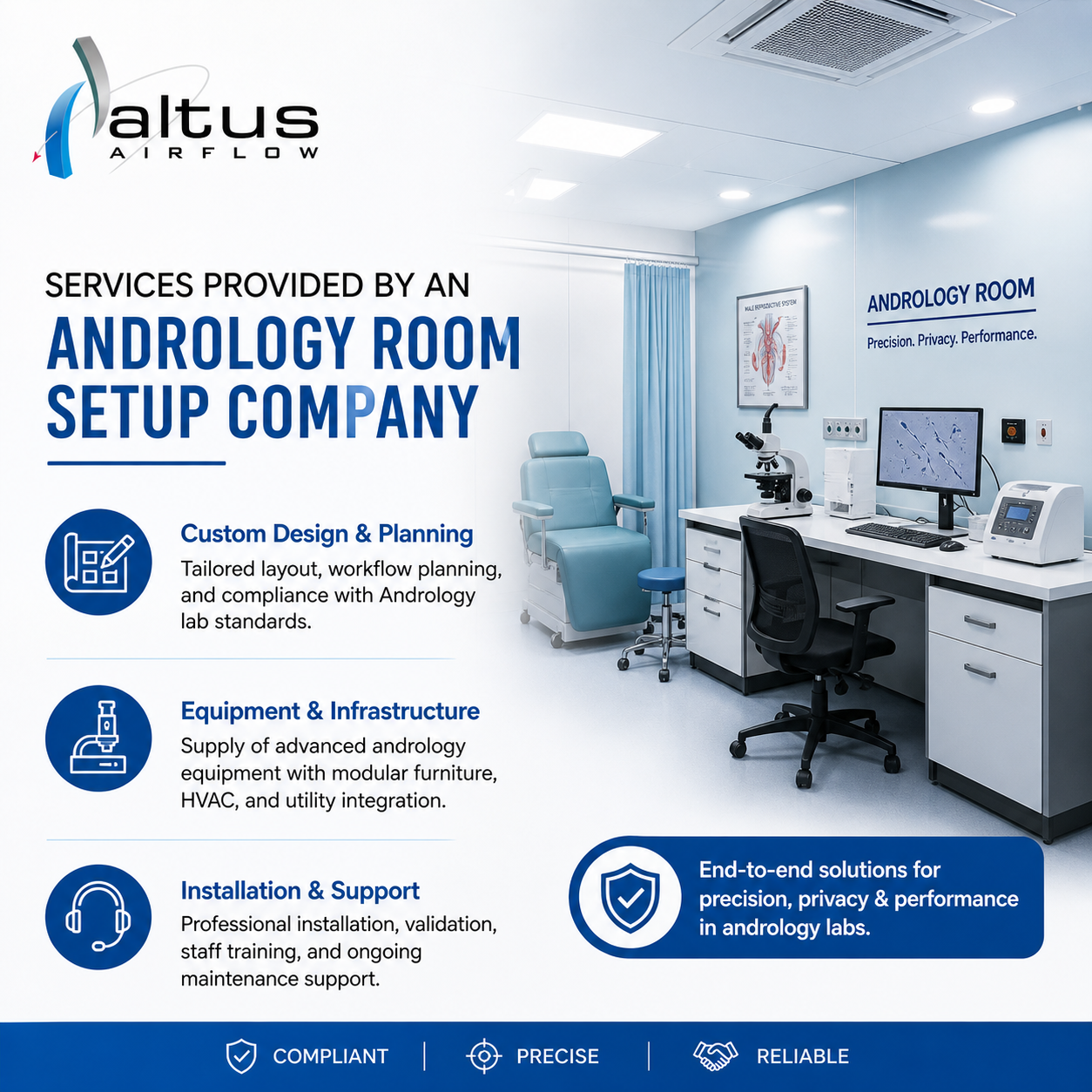
Modern fertility and reproductive healthcare facilities require specialized laboratory environments to support accurate diagnosis, sample safety, and successful treatment outcomes. Among the most important sections of an IVF center or fertility clinic is the andrology laboratory, where male fertility testing and reproductive sample processing are performed. Proper Andrology Room Design plays a major role in ensuring contamination control, workflow efficiency, and laboratory compliance. Companies like Altus Airflow help healthcare institutions create advanced andrology laboratory environments that support precision, sterility, and operational efficiency.
An andrology room is far more than a basic laboratory space. It requires controlled environmental conditions, advanced airflow systems, ergonomic planning, and specialized infrastructure to maintain the quality of reproductive samples. Since even small environmental changes can affect test accuracy and sample viability, every component of the laboratory must be carefully planned and integrated.
This blog explains the key components of an andrology room, their functions, and why proper infrastructure is essential for reproductive healthcare facilities.
Understanding an Andrology Room
An andrology room is a specialized laboratory area dedicated to male reproductive testing and fertility-related procedures. These laboratories are commonly found in:
IVF centers
Fertility clinics
Hospitals
Reproductive medicine departments
Diagnostic laboratories
Andrology labs are designed to support procedures such as:
Semen analysis
Sperm motility testing
Sperm washing
Morphology analysis
Sample preparation
Cryopreservation support
Since reproductive samples are highly sensitive, the laboratory environment must maintain strict hygiene and contamination control standards.
Importance of Proper Andrology Room Infrastructure
A well-planned Andrology Room Design helps ensure:
Accurate laboratory testing
Better sample protection
Reduced contamination risk
Improved workflow efficiency
Regulatory compliance
Safe laboratory operations
Poorly designed laboratory spaces can negatively impact testing accuracy and fertility treatment outcomes.
Key Components of an Andrology Room
1. Cleanroom Infrastructure
Cleanroom systems are among the most important components of an andrology laboratory.
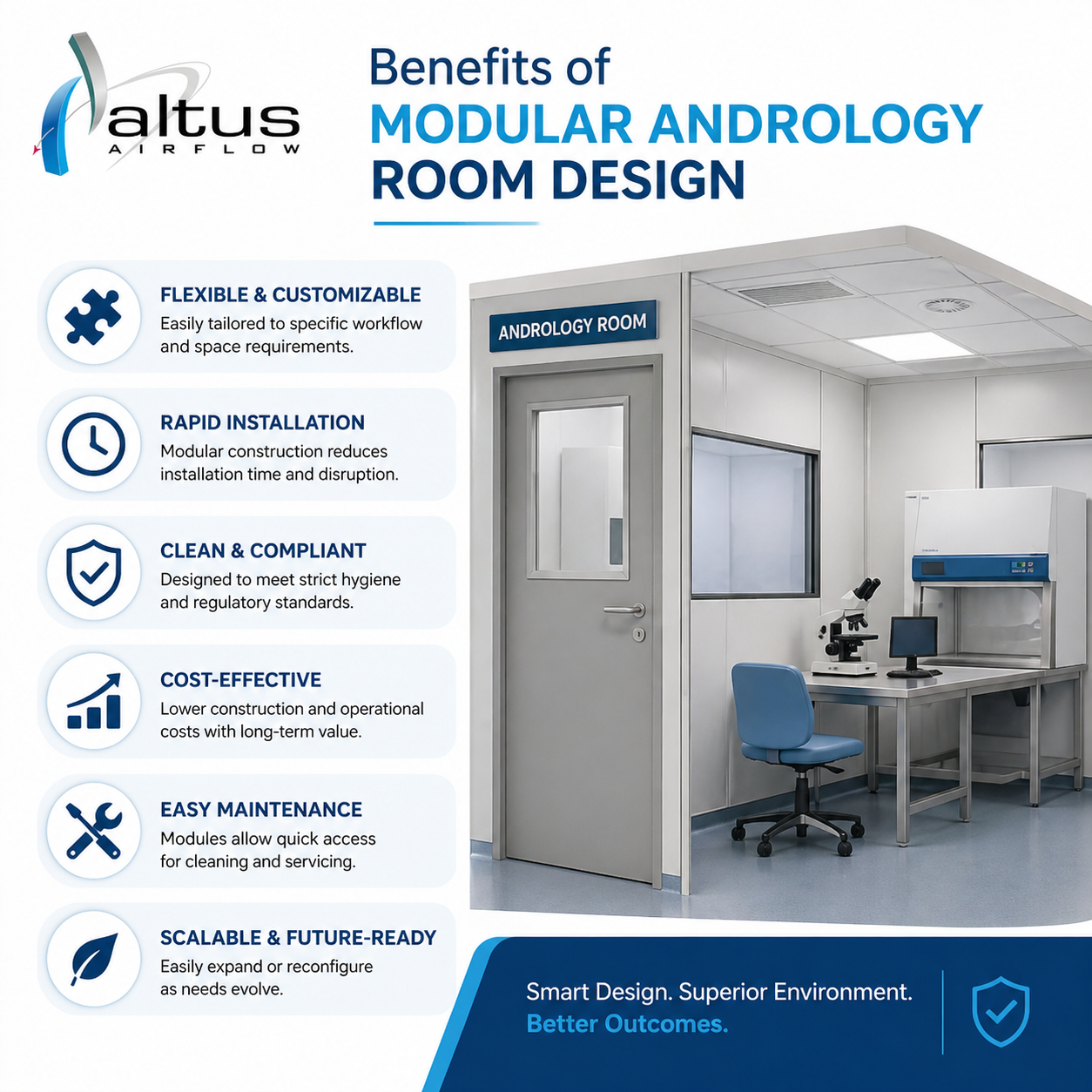
Modern andrology rooms generally use modular cleanroom infrastructure that includes:
Seamless wall panels
False ceilings
Hermetically sealed doors
Cleanroom partitions
Antibacterial surfaces
These systems help maintain sterile conditions and reduce contamination risks.
2. HVAC and Air Handling Systems
Air quality management is critical in reproductive laboratories.
Advanced HVAC systems help maintain:
Controlled temperature
Stable humidity
Positive air pressure
Proper air circulation
A controlled environment is essential for protecting reproductive samples and maintaining laboratory standards.
3. HEPA Filtration Systems
High-Efficiency Particulate Air (HEPA) filters are used to remove airborne contaminants from laboratory environments.
HEPA filtration helps eliminate:
Dust particles
Microorganisms
Allergens
Airborne bacteria
This improves air quality and helps protect sensitive samples.
4. Laboratory Workstations
Specialized laboratory workstations are designed to support sterile and efficient operations.
Common workstation features include:
Stainless steel surfaces
Easy-to-clean materials
Chemical resistance
Ergonomic layouts
Proper workstation planning improves laboratory productivity and reduces contamination risks.
5. Controlled Lighting Systems
Laboratory lighting directly affects visibility and testing accuracy.
Modern andrology labs use lighting systems that provide:
Uniform illumination
Reduced glare
Better microscopic visibility
Energy efficiency
Good lighting helps laboratory staff perform procedures with greater precision.
6. Anti-Static Flooring
Flooring used in reproductive laboratories must support hygiene and safety.
Specialized flooring systems generally offer:
Anti-static properties
Seamless finishes
Chemical resistance
Slip resistance
Easy maintenance
This helps maintain a sterile laboratory environment.
7. Environmental Monitoring Systems
Environmental monitoring is essential for maintaining laboratory stability.
Monitoring systems track:
Temperature
Humidity
Air pressure
Air quality
Ventilation performance
Continuous monitoring helps ensure laboratory compliance and protects sample integrity.
8. Laminar Airflow Cabinets
Laminar airflow cabinets provide contamination-controlled workspaces for handling reproductive samples.
These systems help maintain:
Sterile airflow
Particle-free environments
Controlled sample handling conditions
They are commonly used during sample preparation procedures.
9. Specialized Storage Systems
Andrology laboratories require proper storage for equipment, consumables, and reproductive samples.
Storage systems generally include:
Stainless steel cabinets
Refrigerated storage units
Cryopreservation storage
Sample organization systems
Proper storage improves workflow and protects laboratory materials.
10. Electrical and Backup Systems
Reproductive laboratories depend heavily on specialized equipment that requires uninterrupted power supply.
Professional laboratory infrastructure includes:
Dedicated electrical systems
UPS backup systems
Emergency power support
Equipment protection systems
Reliable power systems help prevent operational disruptions and sample loss.
Additional Components Commonly Found in Andrology Labs
Medical Gas Pipeline Systems
Some laboratory procedures require integrated utility systems such as:
Vacuum systems
Compressed air
Gas supply systems
These utilities support laboratory operations safely and efficiently.
Microscopy and Diagnostic Equipment Zones
Specific areas are allocated for equipment such as:
Microscopes
Centrifuges
Sperm analyzers
Incubators
Proper zoning improves workflow and operational organization.
Sample Collection Areas
Many andrology facilities include private sample collection rooms designed for patient comfort and privacy.
These areas are designed with:
Hygienic interiors
Sound privacy
Comfortable layouts
Patient comfort contributes to better clinical experiences.
Importance of Air Quality in Andrology Labs
Air quality directly affects reproductive sample quality and laboratory performance.
Poor air quality may lead to:
Sample contamination
Reduced sperm viability
Inaccurate testing
Laboratory compliance issues
Proper airflow systems help maintain stable and contamination-free laboratory conditions.
Benefits of Modern Andrology Room Design
Improved Laboratory Accuracy
Controlled environmental conditions support reliable diagnostic results.
Better Infection Control
Cleanroom systems minimize microbial contamination.
Efficient Workflow
Organized layouts improve staff coordination and operational efficiency.
Regulatory Compliance
Professional laboratory design helps meet healthcare standards.
Long-Term Durability
Modular infrastructure reduces maintenance requirements and improves longevity.
Future Expansion Flexibility
Modular systems allow easier upgrades and laboratory expansion.
Challenges of Poor Laboratory Design
Improper laboratory infrastructure can create several operational problems, including:
Contamination risks
Inconsistent environmental conditions
Workflow inefficiencies
Equipment integration issues
Increased maintenance costs
Reduced testing accuracy
These issues can negatively affect fertility treatment outcomes and laboratory performance.
Future Trends in Andrology Laboratory Infrastructure
Modern reproductive laboratories are evolving with advanced technologies and automation systems.
Emerging trends include:
Smart laboratory automation
Digital environmental monitoring
AI-assisted analysis systems
Energy-efficient HVAC systems
Touchless laboratory controls
Advanced contamination prevention technologies
Modern laboratory infrastructure is increasingly focused on precision, safety, and scalability.
Factors to Consider During Andrology Room Planning
Healthcare institutions should evaluate several factors before setting up an andrology laboratory:
Laboratory workflow
Sterility requirements
Air quality standards
Equipment compatibility
Compliance regulations
Future expansion capability
Maintenance requirements
Careful planning helps ensure long-term operational success.
Why Professional Laboratory Design Matters
Designing an andrology laboratory requires expertise in cleanroom engineering, healthcare infrastructure, and laboratory workflow management.
Professional providers help ensure:
Proper contamination control
Reliable airflow systems
Efficient equipment integration
Compliance with healthcare standards
Long-term operational efficiency
This helps healthcare facilities create safe and future-ready reproductive laboratories.
Conclusion
An andrology laboratory requires highly specialized infrastructure to maintain sample integrity, testing accuracy, and contamination control. Proper Andrology Room Design includes several essential components such as cleanroom systems, HVAC units, HEPA filtration, laboratory workstations, environmental monitoring systems, and advanced airflow management technologies.
Healthcare facilities looking to establish advanced reproductive laboratories can benefit from modern laboratory infrastructure solutions provided by Altus Airflow, helping create safe, efficient, and future-ready andrology environments that support precision-based reproductive healthcare.
FAQs
1. What is Andrology Room Design?
Andrology Room Design refers to the planning and development of specialized laboratory infrastructure used for male fertility testing and reproductive healthcare procedures.
2. Why is air quality important in an andrology room?
Air quality helps protect reproductive samples from contamination and supports accurate laboratory testing.
3. What type of filtration system is used in andrology labs?
Most andrology laboratories use HEPA filtration systems to maintain clean air conditions.
4. Why are laminar airflow cabinets used in andrology labs?
They provide sterile workspaces for safe handling of reproductive samples.
5. What flooring is commonly used in andrology laboratories?
Anti-static and seamless flooring systems are commonly used for hygiene and safety.
Read Our Previous Blog ---------------> What surgeries are performed in a cardiac OT?


Write a comment ...